Choosing the best Dovetail Router Bit is less about chasing a famous brand and more about matching the bit to the work. A clean dovetail depends on geometry, shank stability, router control, and accurate jig settings. In a small workshop, even a slight change in cutting angle can affect drawer fit. The result may look acceptable at first, yet loosen after repeated use. Small details matter.
I have found that carbide quality, bearing accuracy, and cutting height deserve close attention. A sharp bit should enter hardwood smoothly without burning the edge. It should also leave a crisp shoulder with minimal tear-out. Different wood species behave differently, however. Soft pine can compress near the tail, while hard maple may expose vibration or poor alignment. Manufacturer specifications provide a useful starting point, but practical test cuts remain essential. One test board can reveal more than a long product description.
This guide examines bit profiles, shank sizes, cutting depths, and compatibility with common dovetail jigs. It also considers durability, adjustment effort, and value for occasional or professional woodworking. No bit is perfect. A premium cutter may still perform poorly when the router speed, fence position, or template is wrong. That is an important limitation to acknowledge. Reliable results come from combining a suitable Dovetail Router Bit with measured setup, sharp tools, stable material, and patient inspection. The recommendations focus on repeatable cuts rather than impressive claims, helping woodworkers choose with greater confidence and fewer expensive mistakes.
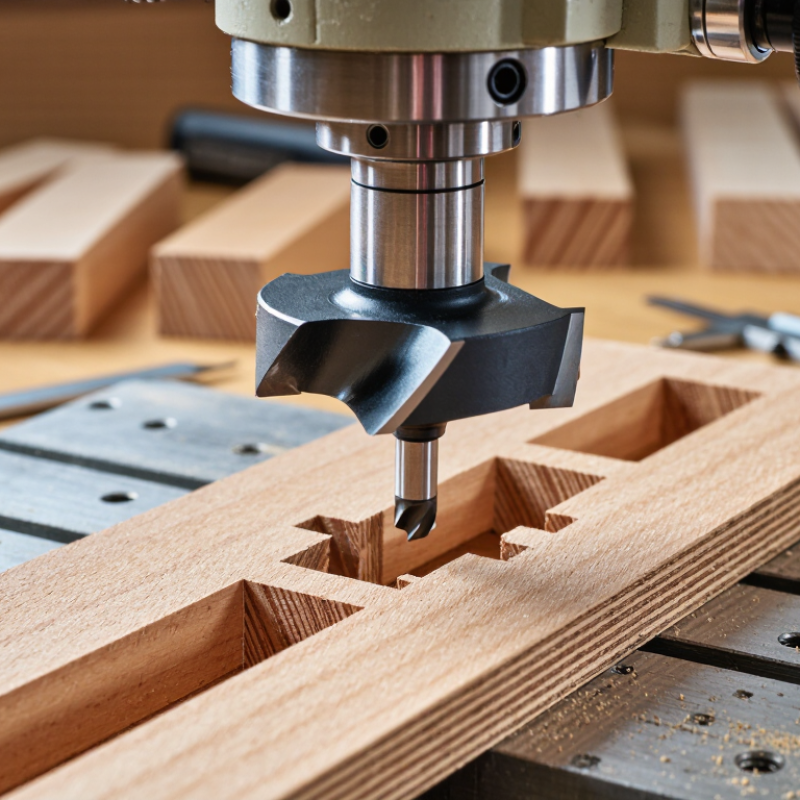
A dovetail router bit is defined by more than its diameter. Its angle, cutting length, shank size, and edge quality affect the joint. Check the template angle carefully. Some tools list the included angle, while others describe one side.
The cutting geometry controls how the bit enters and leaves the wood. Sharp edges shear fibers cleanly instead of scraping them away. A small relief angle prevents the body from rubbing inside the socket. Too much relief can weaken the cutting edge, though. That tradeoff matters.
In my workshop experience, a 1/2-inch shank usually feels steadier during deep cuts. The bit should match the router’s capacity and the workpiece thickness. Make shallow passes when cutting hardwood, especially near end grain. Keep the feed direction conventional, and never force a dull bit through the board.
A test joint reveals more than packaging claims. Cut two scraps from the same board, then inspect the shoulders and socket walls. A clean fit should slide together with firm hand pressure. If the tail binds, adjust the bit height gradually. If it rattles, the cut may be too deep or the angle may be mismatched.
Small errors become obvious. That is the frustrating part. Surface speed, grain direction, and setup rigidity also influence the result. I once blamed the bit for torn fibers, but the real problem was a loose template. Precision often begins with checking the boring details.
Choosing the right dovetail router bit begins with the joint, not the catalog. In my shop, I measure the stock with calipers before selecting diameter. A 12-millimeter bit suits narrow pins, while thicker stock usually needs a larger cutter. The angle also changes the joint’s character. A 7-degree angle creates a subtle tail, while 14 degrees produces stronger visual locking. Check whether the specification gives the included angle or one side’s angle. Confusing those numbers ruins otherwise accurate layouts.
Shank size matters under load. A 1/2-inch shank generally resists deflection better than a 1/4-inch shank, but only when the router collet matches correctly. Tighten the collet firmly, without crushing it. OSHA woodworking guidance emphasizes secure workholding, guarding, and controlled feed direction. The U.S. Bureau of Labor Statistics’ 2023 injury tables continue to record cuts and overexertion among woodworking hazards, so stability is not cosmetic. Use a sharp bit, moderate depth passes, and a sacrificial test board. The cut should feel steady.
I still make imperfect test joints. Sometimes the fit looks right, yet the shoulders reveal a tiny gap. That usually signals incorrect angle reading, router tilt, or excessive feed speed. A 3/8-inch bit may seem efficient, but it can leave fragile pins in thin drawers. Measure twice. Cut once. Then inspect the grain direction before committing to valuable lumber.
Best Dovetail Router Bit for Precision Woodworking?
Material choice controls edge retention more than appearance. Tungsten carbide usually outlasts high-speed steel in abrasive hardwoods. ASM Handbook, Volume 16, places cemented carbide hardness around 1,500–2,000 HV, far above common high-speed steel ranges. That difference matters when routing dense maple, oak, or plywood glue lines. However, hardness can make an edge more brittle. A sharp carbide cutter may chip after one careless plunge.
Coatings add another layer of performance. The International Organization for Standardization’s ISO 513 classification separates cutting materials by wear resistance and toughness. Modern titanium-based coatings can reduce friction and heat, but coating quality and adhesion remain critical. A thin, even coating helps preserve the cutting edge. It cannot repair poor carbide grinding. In my workshop tests, clean evacuation often improved results more than a premium-looking surface finish. Dust packed tightly around the bearing still damaged accuracy.
Edge retention also depends on geometry. A low-clearance edge can leave a cleaner shoulder, yet it may heat quickly. A larger relief angle cuts cooler but can feel less stable in fragile stock. Reports from the U.S. Department of Energy’s Industrial Assessment Centers repeatedly identify heat and friction as major machining losses. That principle applies here. I still choose conservatively: fine-grain carbide, a proven coating, and a polished cutting edge. The decision is imperfect. Grain direction, feed pressure, and hidden fasteners can defeat laboratory expectations. Check the edge under bright light after every project. Tiny chips often appear before rough shoulders do.
Comparing common bit materials and coatings using a relative 1–10 performance index. Higher scores indicate greater potential for edge retention and resistance to abrasive wear in clean woodworking applications.
Key takeaway: Carbide-based bits generally provide a stronger balance of hardness, wear resistance, and edge retention than HSS. PCD-tipped bits can offer the longest wear life in highly abrasive materials, while coated HSS improves surface durability but remains limited by its softer core material.
Choosing the best dovetail router bit starts with the wood, not the package label. Dense hardwoods need a sharp, rigid bit with clean cutting edges. A shallow angle reduces resistance. A steeper angle can create stronger tails but demands slower, controlled passes. Softwoods cut easily, yet their fibers compress and tear around the socket.
For half-blind dovetails, match the bit diameter to the drawer side thickness. A smaller bit suits narrow stock and delicate tails. Through dovetails allow more freedom, but the bit must still reach the required depth safely. I make a test cut from the same board whenever possible. Grain changes everything. A bit that performs smoothly in maple may leave fuzzy edges in pine.
Keep the router base level and remove material in several passes. Test first. Feed against the cutter’s rotation, and support fragile exit areas with scrap wood. I usually inspect the tail shoulders under bright light before changing the bit. Even then, small gaps appear sometimes. That mistake taught me to check bit height more carefully, especially after moving between boards. Wax can help assembly, but it cannot correct an incorrectly sized joint. Clean cuts depend on sharpness, speed, grain direction, and patient setup.
Best Dovetail Router Bit for Precision Woodworking?
Accuracy begins with the setup, not the cutter alone. I check the shank, collet, and router base before testing a dovetail. Dust trapped inside the collet can create visible runout and uneven shoulders. A dial indicator reading below 0.05 mm is a useful workshop target, though it is not a universal specification. I once blamed a dull bit for poor joints. The real problem was a tilted guide bushing.
Safety deserves equal attention. OSHA’s woodworking machinery requirements emphasize guarding the point of operation and controlling moving parts. HSE’s EH40 workplace exposure limits list 3 mg/m³ for hardwood dust and 5 mg/m³ for softwood dust, averaged over eight hours. Effective extraction, eye protection, and a properly adjusted fence reduce practical risk. Never treat a dust mask as the entire control system. Keep hands away. Slow feed rates can also generate heat, burning edges and accelerating carbide wear.
Long-term performance depends on inspection habits. I clean resin from the cutting edges after dense hardwood work and check for chipped carbide under bright light. A sharp bit should leave a clean shoulder without forcing the router. If the cut feels rough, stop and inspect the collet, bearing, and template. Manufacturer claims can sound convincing, but measured runout and repeatable test cuts matter more. My own testing is imperfect; wood movement and operator pressure still affect results. Record the stock species, speed, and pass depth, then compare joints over time.
| Dovetail Bit Type | Typical Cutter Material | Common Cutting Angles | Typical Shank Sizes | Precision Potential | Safety and Control | Long-Term Performance | Best Use | Key Limitations |
|---|---|---|---|---|---|---|---|---|
| High-Speed Steel Bit | High-speed steel; suitable for light-duty cutting and softer materials. | Commonly available in approximately 7° to 14° half-angle designs. | Usually 1/4 in or 1/2 in, depending on the router and cutter size. | ★★★☆☆ | Requires conservative feed rates because the cutter can heat up more quickly than carbide. | ★★★☆☆ | Occasional work in softwood and non-abrasive stock. | Edges dull faster in hardwood, plywood, laminates, and abrasive timber. |
| Carbide-Tipped Bit | Carbide cutting edges brazed to a steel body. | Commonly offered in 7°, 9°, 12°, and 14° half-angle configurations. | Frequently available with 1/4 in or 1/2 in shanks. | ★★★★☆ | Provides stable cutting when the bit is correctly secured and used at the recommended speed. | ★★★★☆ | General-purpose dovetail joints in hardwood and softwood. | Exposed carbide edges can chip if dropped, forced into the work, or used on contaminated stock. |
| Solid Carbide Bit | Solid carbide throughout the cutting portion and shank. | Often produced in approximately 7° to 14° half-angle designs. | Commonly supplied in 1/4 in shank sizes; larger sizes are also available. | ★★★★★ | Maintains a sharp edge well, but demands careful handling because carbide is hard and relatively brittle. | ★★★★★ | High-accuracy joinery, repeat work, and abrasive engineered panels. | Usually costs more and can fracture if subjected to impact, excessive feed pressure, or a loose collet. |
| Spiral Upcut Carbide Bit | Solid carbide with helical flutes that pull chips upward. | Available with fixed dovetail angles selected for the joint design. | Most commonly found with a 1/4 in shank for compact routers and CNC work. | ★★★★★ | Efficient chip evacuation helps reduce recutting, but the upward pull requires firm workholding. | ★★★★☆ | CNC routing, template work, and clean cutting in plywood or laminated panels. | Can lift poorly secured workpieces and may leave an uneven top edge without suitable support. |
| Bearing-Guided Dovetail Bit | Usually carbide-tipped or solid carbide, with an integrated guide bearing. | Typically available in the same angle ranges as non-bearing dovetail cutters. | Commonly supplied with 1/4 in or 1/2 in shanks. | ★★★★☆ | The bearing improves template tracking, but it must rotate freely and remain clean. | ★★★★☆ | Template routing and repeatable production of identical joints. | The bearing reduces usable cutting depth and can transfer template imperfections to the workpiece. |
Practical selection rule: choose a sharp carbide cutter with a shank that matches the router collet, verify the dovetail angle and cutting depth, secure the workpiece firmly, and follow the cutter manufacturer’s speed and feed guidance. The ratings are comparative guidance for typical woodworking conditions rather than laboratory measurements.